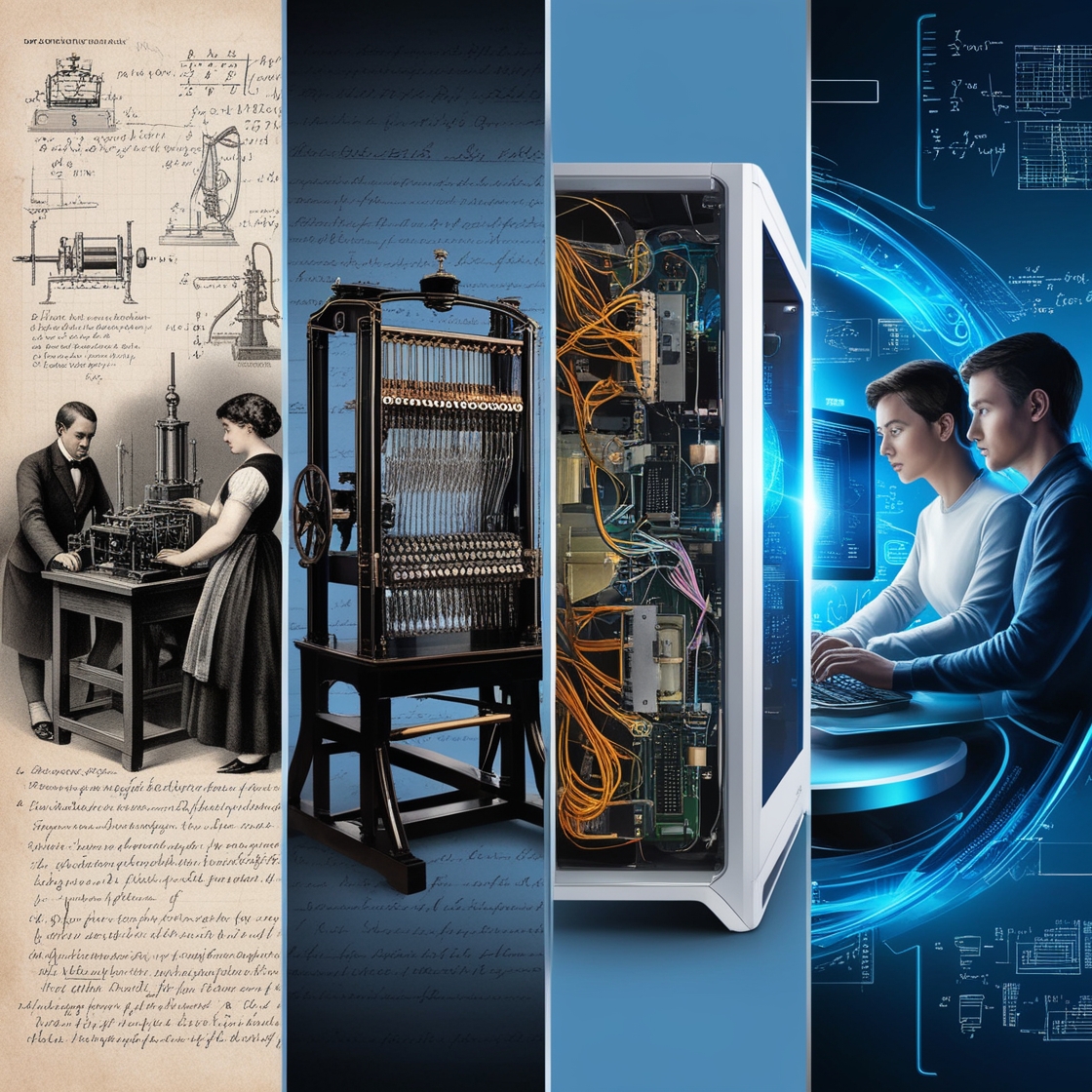
Explore the pivotal moments that have shaped the field of Artificial Intelligence over the years.
Warren McCulloch and Walter Pitts introduced a groundbreaking concept that would serve as the foundation for artificial intelligence
Alan Turing introduces the Turing Test, a method to evaluate machine intelligence.
The term "Artificial Intelligence" is coined during the Dartmouth Conference.
Expert systems become popular, simulating human decision-making processes.
In 1943, Warren McCulloch and Walter Pitts introduced a groundbreaking concept that would serve as the foundation for artificial intelligence: the first mathematical model of a neural network. Inspired by the workings of the human brain, their model used binary logic to mimic neural activity, demonstrating how complex computations could be represented by simple on/off states. This pioneering work laid the groundwork for the development of machine learning algorithms and remains a cornerstone in the study of AI today.
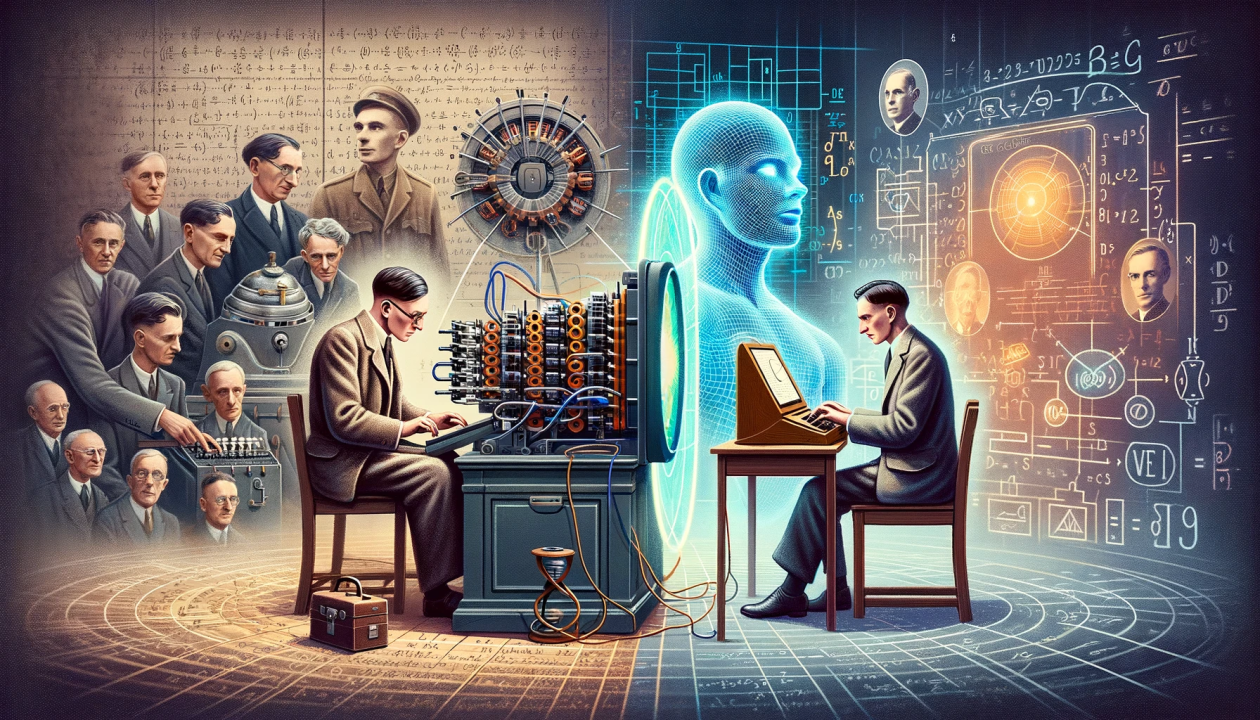
Alan Turing, often called the "Father of Computer Science," proposed a thought-provoking question in his 1950 paper "Computing Machinery and Intelligence": Can machines think? To address this, he introduced the Turing Test, a method for evaluating a machine's ability to exhibit intelligent behavior indistinguishable from that of a human. The test involves a human judge engaging in a conversation with both a machine and another human, with the goal of determining which is which. Turing’s test remains a benchmark in discussions of machine intelligence and artificial cognition.
The year 1956 marked a turning point in the history of technology, as the term "Artificial Intelligence" was officially coined during the Dartmouth Summer Research Project on Artificial Intelligence. Organized by John McCarthy, Marvin Minsky, Nathaniel Rochester, and Claude Shannon, the conference brought together leading minds to explore the possibilities of creating machines capable of human-like reasoning and problem-solving. This event is widely regarded as the formal birth of AI as a dedicated field of study, setting the stage for decades of innovation and discovery.
The 1960s saw the emergence of early AI programs designed to simulate human reasoning in specific domains, known as expert systems. Notable examples include ELIZA, an early natural language processing program that mimicked human conversation, and SHRDLU, which could understand and respond to commands about a virtual blocks world. These systems demonstrated the potential of AI to engage in human-like interaction and solve domain-specific problems, paving the way for more sophisticated applications in later decades.