Future AI
The Road Ahead

1. Healthcare

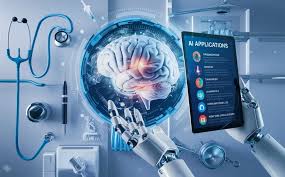
AI is making healthcare proactive rather than reactive. For example, predictive analytics helps public health authorities anticipate epidemics and allocate resources effectively. Virtual health assistants bridge the gap between patients and doctors by providing immediate support for non-critical queries. Moreover, AI-driven drug discovery is revolutionizing how we combat diseases, leading to faster breakthroughs.

  • Predictive Analytics:

  • AI predicts disease outbreaks by analyzing historical and real-time data, aiding in preventive healthcare measures

  • Drug Discovery:

  • AI accelerates drug research by analyzing molecular structures, identifying potential drug candidates, and reducing the time and cost of development.

  • Virtual Health Assistants:

  • AI chatbots and voice assistants provide basic health advice, remind patients to take medications, and monitor chronic conditions.

2. Robotics

AI-powered robotics are not limited to industrial automation. For example, in agriculture, robots equipped with AI detect crop diseases and apply pesticides precisely, reducing waste. In healthcare, surgical robots like the da Vinci system allow surgeons to perform complex procedures remotely with unparalleled accuracy. Similarly, in warehouses, AI-enabled robots streamline operations, meeting the demands of e-commerce and fast deliveries.

  • Healthcare Robotics:

  • Surgical robots assist in minimally invasive surgeries with high precision, reducing recovery times and risks for patients.

  • Agriculture:

  • AI-driven robots perform tasks like planting, harvesting, and monitoring crops, optimizing yields and minimizing resource usage.

  • Retail and Warehousing:

  • Robots manage inventory, sort products, and handle logistics, ensuring faster deliveries and improved efficiency.


3. Finance

AI in finance is about precision and trust. Credit scoring systems ensure fair lending practices by using unbiased algorithms, while robo-advisors democratize wealth management by offering personalized advice at low costs. Additionally, regulatory compliance systems use AI to scan thousands of transactions for anomalies, ensuring that institutions follow legal requirements while preventing costly penalties.

  • Credit Scoring:

  • AI evaluates loan applications by analyzing credit history, income, and spending habits, reducing biases and providing fair assessments.

  • Robo-Advisors:

  • Automated platforms use AI to guide users on investment decisions based on their financial goals, risk tolerance, and market trends.

  • Regulatory Compliance:

  • AI helps banks and financial institutions adhere to regulations by monitoring compliance risks and generating reports.


4. Education

AI is bridging gaps in education by enabling students worldwide to access quality resources and support. Platforms like Duolingo and Khan Academy use AI to create interactive and personalized learning experiences, making education engaging and inclusive.

  • Personalized Learning:

  • AI-powered platforms adapt to individual learning styles and paces, tailoring lessons to each student..

  • Automated Grading:

  • AI reduces teachers' workloads by grading assignments and tests, allowing them to focus on teaching..

  • Virtual Tutors:

  • AI chatbots and assistants provide instant help to students, answering questions and explaining concepts.